

This course provides an overview of musculoskeletal disorders, their signs and symptoms, and ergonomic risk factors. You will learn how to apply ergonomic principles in the workplace to reduce injury and increase human performance.
In addition, safe manual handling techniques are introduced. In office based work environment, a detailed workstation setup session are carried out.
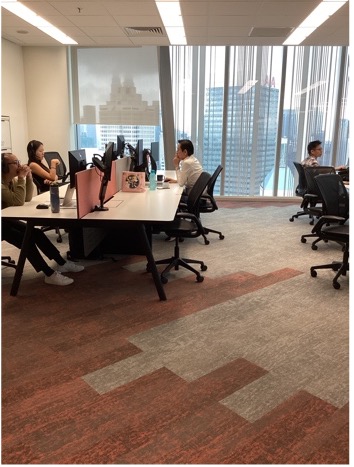
This program will provide methodology and skills necessary to enable participants to identify, prioritise and eliminate or reduce workers exposure to ergonomic related workplace risk factors. This course illustrates the principles with workshops and examples from worksites and workstation setup demonstration. The course provides awareness on poor work postures and how to improve these postures and conditions in the workplace to avoid long term health effects.
This training will enable participants to:
It’s an introductory course covering musculoskeletal disorders (MSDs), their signs and symptoms, and the ergonomics risk factors that cause them, along with practical guidance on applying ergonomics principles to reduce injury risk.
Material handlers, warehouse workers, assembly operators, QA/QC inspectors, and office-based workers.
This is an awareness-level training course for employees, not a formal DOSH-aligned risk assessment. A WERA is a structured Initial/Advanced assessment carried out by a competent Ergonomics Trained Person (ETP); this training builds general knowledge and good posture and handling habits.
Yes. For office-based environments, the course includes a detailed workstation setup demonstration alongside the classroom content.
Yes, safe manual handling techniques are introduced as part of the training.
Participants learn the definition of ergonomics at the workplace, how to recognise the primary risk factors behind overexertion injuries, and how to implement control measures to reduce their own exposure to poor ergonomic conditions.
Yes, all MESH training conducted in Malaysia is HRD Corp claimable.
Yes, MESH can deliver this training in-house, tailored to office-based or industrial settings as needed.
Whether a chair is genuinely ergonomic for you depends on how well it’s adjusted to your body and task, not just its features on paper. An Advanced ERA using the ROSA (Rapid Office Strain Assessment) method can evaluate your chair, desk setup and posture together to tell you exactly what’s working and what needs adjusting.
Report it to your supervisor or Safety & Health Committee so your workstation or task can be reviewed, and see a doctor if the pain persists or is severe. An ergonomics assessment of your workstation or task can help identify what’s contributing to the pain and what adjustments or controls would help.
Possibly, under SOCSO’s Employment Injury Insurance Scheme — but it depends on whether the condition can be shown to have arisen out of and in the course of your employment, supported by medical evidence, and each case is assessed individually. The right next step is to consult your employer’s occupational health doctor and lodge a claim with SOCSO directly for an official determination.
An Occupational Health Doctor (OHD) is a medical doctor registered with DOSH under the USECHH Regulations to conduct medical surveillance, assess workers’ fitness for tasks involving health hazards, and advise employers on managing work-related health risks.
Back support belts aren’t officially recognised as PPE for manual handling, and current evidence doesn’t show they reliably prevent back injury — some studies suggest reliance on a belt can even encourage riskier lifting habits. Proper lifting technique, mechanical aids, and load limits set through a manual handling risk assessment are considered more effective controls.
Yes, incorrect lifting technique or repeated heavy lifting is a recognised risk factor for a slipped (herniated) disc, especially when combined with twisting or bending at the spine. Age, existing spine condition, and overall load also play a role, so risk varies by individual.
Prolonged, repetitive wrist flexion — including extended typing with poor wrist posture — is a recognised risk factor for carpal tunnel syndrome, though it’s usually one of several contributing factors alongside workstation setup and individual susceptibility. Ergonomic keyboard/mouse setup and regular breaks can help reduce the risk.