

Understanding chemical routes of entry and its harmful effect to human body is pivotal in ensuring workers work safely with chemical. Chemical spills are sometimes inevitable but proper techniques to contain the leaks are possible.
This programme will guide participants to acquire the knowledge on how to safely handle chemicals and control spillage in the workplace.
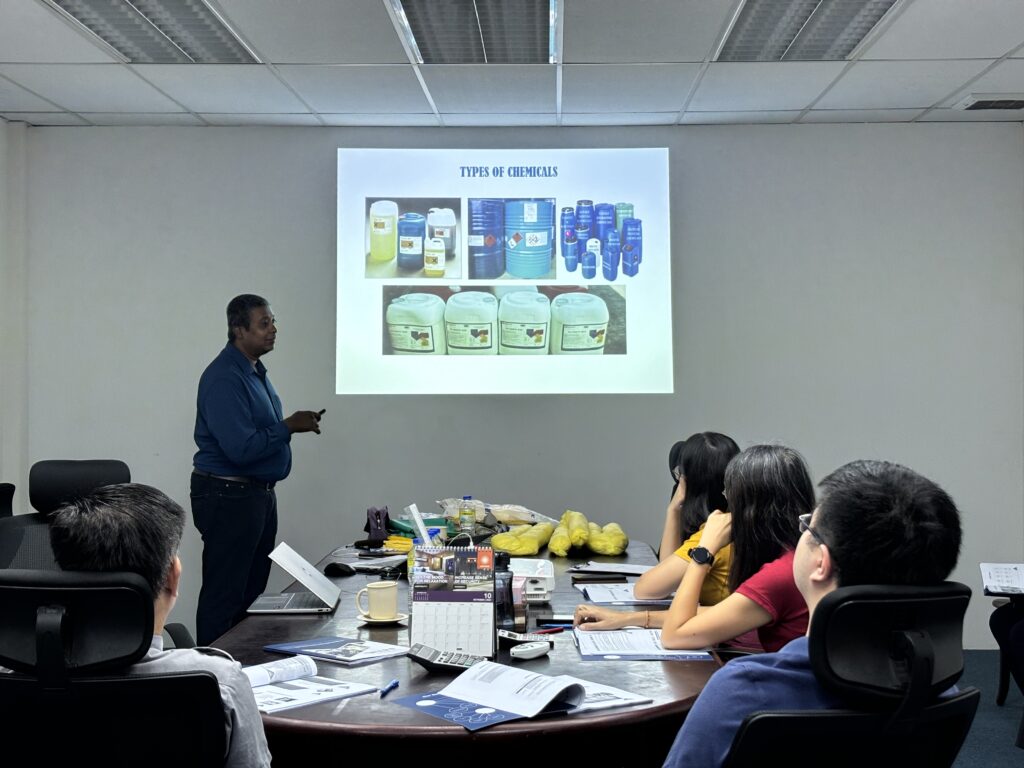
Upon completion of this course, participants will be able to:
Safe handling of chemicals is a requirement under DOSH’s chemical management regulations (USECHH 2000 and CLASS 2013). This course itself isn’t a statutory certification, but it supports the training obligations that come with a documented chemical management programme.
CHRA is a formal, DOSH-registered assessment of chemical exposure risk carried out by a competent assessor. This training is a practical skills course for the people who handle chemicals day to day — it builds awareness and spill-response skills but doesn’t replace the CHRA itself.
Participants will understand chemical hazards in their workplace, follow correct storage, handling and labelling practices, and know the do’s and don’ts for containing a spill safely when one happens.
The programme combines classroom instruction on chemical hazards and safe practices with guidance on spill containment techniques.
Yes, all MESH training conducted in Malaysia is HRD Corp claimable.
Yes. MESH runs in-house Chemical Safety & Spill Control Training at your premises so the session can reflect the specific chemicals and processes used at your site.
Spill control refers to the immediate actions taken to contain, minimise and clean up a chemical spill before it spreads, harms people, or damages the environment — including containment, absorption or neutralisation of the spilled material, and safe disposal of the spill and any contaminated cleanup materials.
Not exactly — they’re regulated separately. Hazardous chemicals in active use are governed by DOSH’s USECHH Regulations 2000, while scheduled waste is regulated by the Department of Environment under the Environmental Quality (Scheduled Wastes) Regulations 2005. In practice, many hazardous chemicals become scheduled waste once they’re spent, contaminated, or discarded (used solvents, contaminated rags, spill cleanup residue), so scheduled waste handlers need to understand both how to handle the chemical safely and how to manage it correctly once it becomes waste.
We recommend refresher training every 2 years, or sooner if there’s a change in the chemicals used, work processes, or applicable regulations.