

A Workplace Ergonomics Risk Assessment (WERA), often called an Ergonomics Risk Assessment (ERA), identifies ergonomics risk factors at the workplace — awkward postures, repetitive motion, forceful exertion — that can contribute to musculoskeletal disorders (MSDs), so the risks can be eliminated or controlled as far as practicable.
As per DOSH’s Guidelines on Ergonomics Risk Assessment at Workplace 2017, WERA is split into two levels, Initial and Advanced. Each level is carried out by a competent Ergonomics Trained Person (ETP) — MESH’s DOSH-registered ETP team conducts both.
The Initial ERA is a qualitative screening of ergonomics risk factors. Identifying the risk factors allows measures to be taken to eliminate or control the risk as far as practicable, and/or to carry out an Advanced ERA to quantify the risk.
The Advanced ERA assessment uses internationally recognised tools appropriate to the task, such as RULA (Rapid Upper Limb Assessment), REBA (Rapid Entire Body Assessment), ROSA (Rapid Office Strain Assessment), ART (Assessment of Repetitive Tasks), MAC (Manual Handling Assessment Charts) and RAPP (Risk Assessment of Pushing and Pulling). Methods are selected to fit the task — not a fixed checklist MESH promises to run on every job.
We take pride in our ability to accurately assess the ergonomics risk at your workplace, whilst providing practical and economically feasible recommendations and solutions for improvement.
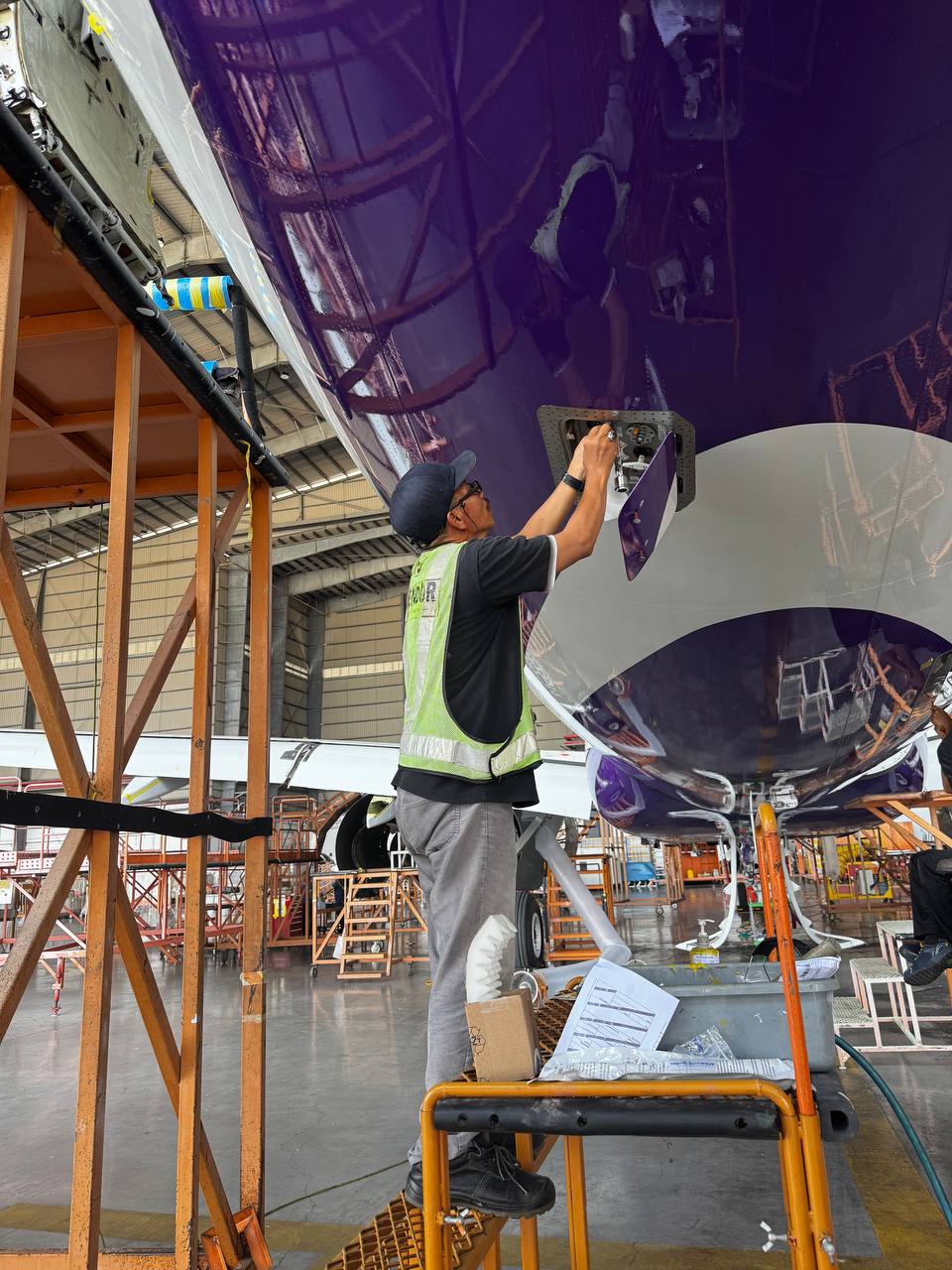
Initial ERA is a qualitative screening of ergonomics risk factors in defined work units, departments, or areas. It flags where risk is present so you can put controls in place and decide whether Advanced ERA is needed on specific tasks or workstations.
| Framework | DOSH Guidelines on Ergonomics Risk Assessment at Workplace 2017 |
| Who conducts it | DOSH-registered Ergonomics Trained Person (ETP) |
| Scope | By work unit / department / area (quotation depends on scope) |
| Common input | Body Discomfort Survey (often included) |
| Deliverable | Assessment + report with practical recommendations |
Request an Initial ERA quotation →
Advanced ERA (AWERA / AERA) is used when Initial findings show elevated risk that needs deeper, quantitative methods. It is conducted by a DOSH-registered ETP, scoped by work unit. Initial ERA is evaluated first before Advanced proceeds — except Office-based ERA, which is often bundled with Initial. Methods are selected to fit the task — not a fixed checklist MESH promises to run on every job.
| When | After Initial ERA results are evaluated |
| Who conducts it | DOSH-registered ETP |
| Scope | By work unit / task / workstation |
| Methods | Examples only (RULA, REBA, ROSA, ART, MAC, RAPP) — chosen to fit the work |
| Bundling | Sequential by default; bundled with Initial only for Office-based ERA |
| Deliverable | Assessment + report with practical, economically feasible recommendations |
Request an Advanced ERA quotation → (or ask about a bundled engagement — Office-based ERA only)
| Initial ERA | Advanced ERA / AWERA | |
| Purpose | Qualitative screening of ergonomics risk factors | Deeper quantification when Initial (or the task) needs it |
| Typical start | Most organisations begin here | Sequential follow-on after Initial results are evaluated (bundled with Initial only for Office-based ERA) |
| Methods | Guideline-based qualitative analysis; often Body Discomfort Survey | Task-appropriate tools (e.g. RULA, REBA, ROSA, ART, MAC, RAPP) |
| Assessor | DOSH-registered ETP | DOSH-registered ETP |
| Output | Report + recommendations; may trigger Advanced | Report + prioritised, practical recommendations |
Under DOSH’s framework, Ergonomics Risk Assessment must be carried out by a competent Ergonomics Trained Person (ETP). MESH’s DOSH-registered ETP team conducts Initial and Advanced ERA for employers who need the assessment delivered and reported.
Quotations are scoped. When you enquire, it helps to share:
MESH will confirm scope and provide a tailored quotation.
After assessment, some organisations add short awareness sessions so supervisors and affected employees understand the findings and day-to-day good practice.
See Ergonomic Awareness Training if you want that add-on discussed with your quotation.
A WERA identifies ergonomics risk factors in a workplace — awkward postures, repetitive motion, forceful exertion — that can lead to musculoskeletal disorders, so employers can implement the right controls to protect workers.
Yes. Under Section 18B of the newly amended Occupational Safety and Health Act 1994 (effective 1 June 2024), every employer, self-employed person and principal must conduct a risk assessment of the safety and health risks at their workplace — ergonomics risk is one of the hazard types this covers. DOSH’s Guidelines on Ergonomics Risk Assessment at Workplace 2017 then sets out how that assessment should be carried out.
Initial ERA is a qualitative screening that flags ergonomics risk factors present in a task or workstation. If risks are identified as elevated, an Advanced ERA follows — a quantitative assessment using internationally recognised tools to measure and prioritise the risk.
Most organisations start with an Initial ERA to screen for risk factors across work areas. If the Initial ERA flags significant risk, an Advanced ERA is then carried out on those specific tasks or workstations to quantify the risk and guide targeted interventions.
An ERA should be reviewed whenever there’s a change to the task, workstation, equipment or work process, and periodically even without changes, so it remains a true reflection of the ergonomics risk.
MESH provides a report with findings and practical, economically feasible recommendations, covering both immediate control measures and, where useful, awareness training for the affected employees as an optional add-on.
Use the contact form, describe your work units and whether you need Initial, Advanced, or bundled ERA, and MESH’s team will follow up. You can also browse related assessments on the Consultancy & Assessments hub.
Tell us your work units, site, and whether you need Initial ERA, Advanced ERA, or both. MESH’s DOSH-registered ETP team will confirm scope and quote.
Related: Consultancy & Assessments · Ergonomics Trained Person (ETP) · Ergonomic Awareness Training · Chemical Health Risk Assessment (CHRA) · Noise Risk Assessment (NRA)