OSHA 1994 and ISO 45001/14001 Compliance Before Warehouse Launch
An Automotive Parts and Logistics Case Study — Senai, Johor
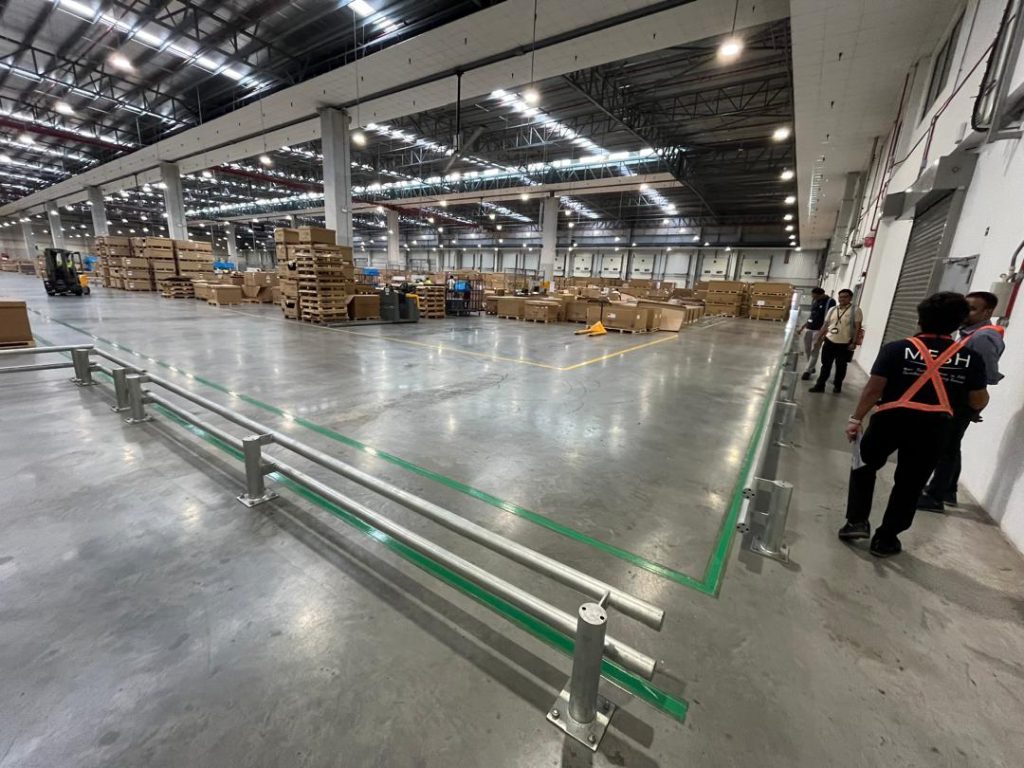
MESH was appointed at the pre-operations stage of a global automotive parts and logistics operator’s new 1-million-square-foot warehouse in Senai, Johor, to build its occupational safety, health, and environmental management system from the ground up. The client reached full Occupational Safety and Health Act 1994 compliance within 3 months and had ISO 45001 and ISO 14001 processes and procedures in place within 6 months — before the facility became operational.
The client is a global automotive parts and logistics operator that was developing a new 1-million-square-foot warehouse in Senai, Johor, Malaysia. Rather than address safety, health, and environmental (SHE) requirements after the facility opened, the client engaged MESH during the pre-operations stage, while the site’s activities and layout were still being finalized.
The Challenge
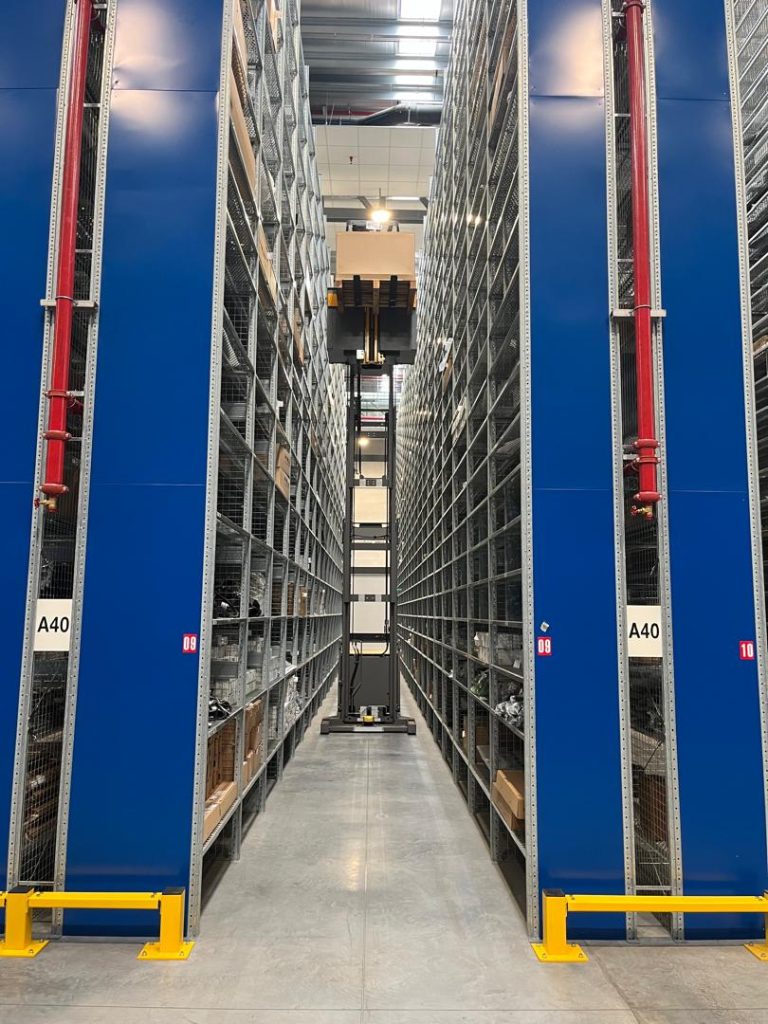
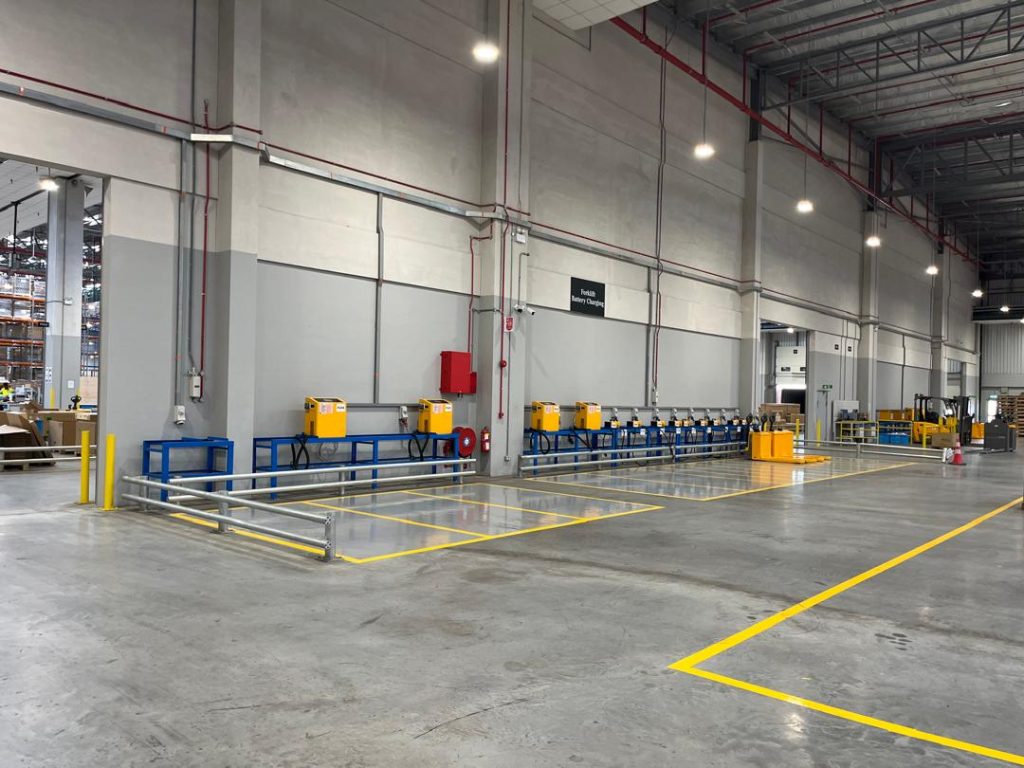
A facility of this scale, built from the ground up, carries significant OSH exposure once operations begin: material handling, warehouse traffic, storage systems, and logistics workflows all needed to be evaluated for risk before they went live. The client needed to:
Identify OSH gaps in the proposed site activities before operations started, when changes are still low-cost to make
Establish the legal compliance processes required under Malaysia’s Occupational Safety and Health Act 1994 (OSHA 1994)
Go beyond local law and build toward international standards — ISO 45001 (occupational health and safety) and ISO 14001 (environmental management) — to meet the client’s global operating requirements
The Solution
MESH was appointed as the client’s HSE consultant across three phases, tailored to the site’s specific activities rather than applied as a standard template:
1. Pre-operations gap assessment. MESH evaluated the proposed site activities at the Senai warehouse and identified the OSH gaps that needed to be closed before operations began.
2. OSHA 1994 compliance build-out. MESH developed the processes required to bring the facility into compliance with the Occupational Safety and Health Act 1994, the client’s baseline legal requirement in Malaysia. This included:
Developing a detailed Hazard Identification, Risk Assessment and Risk Control (HIRARC)
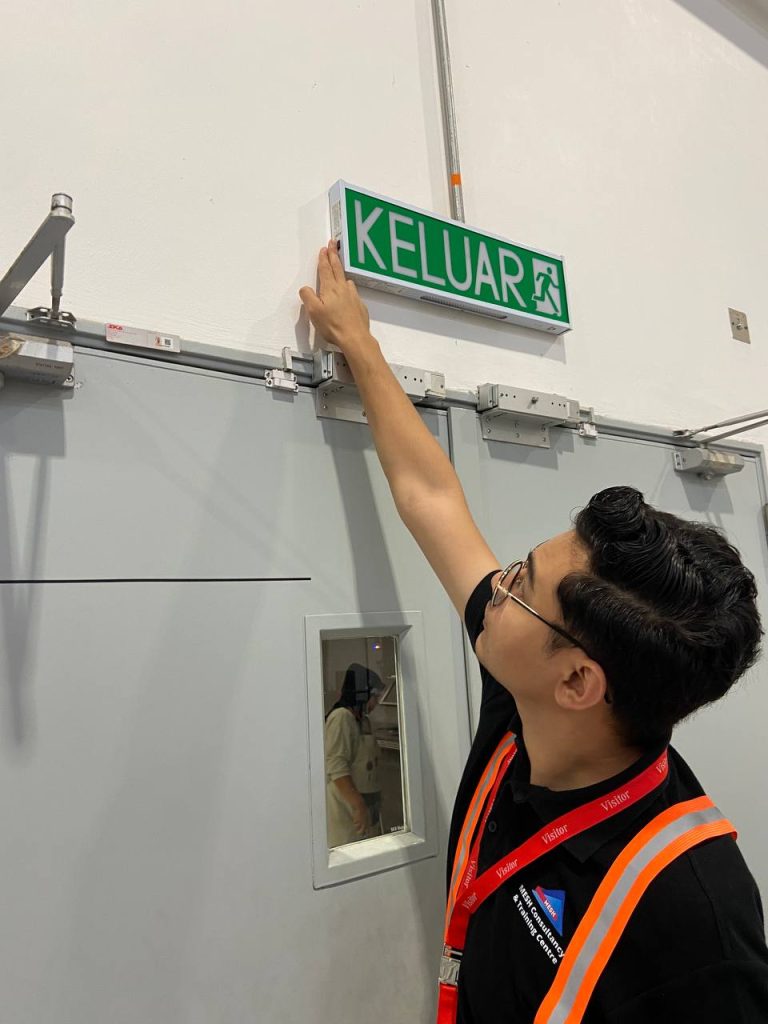
Developing a comprehensive facility emergency response plan
Developing and implementation of an effective Contractor Management Plan (CMP)
3. ISO 45001 and ISO 14001 process development. At the client’s request, MESH extended the scope to build the processes and procedures needed to work toward ISO 45001 and ISO 14001, and handheld the client through implementation — navigating legal and ISO requirements in parallel in a way that fit the organization’s actual operations, rather than applying a generic compliance framework.
MESH continues to support the client on an ongoing basis to advance its safety, health, and environmental standards as the facility operates.
Results
By engaging MESH before operations began, the client was able to close OSH gaps and stand up its compliance processes ahead of go-live, rather than retrofitting them into a live warehouse environment.
OSHA 1994 compliance achieved within 3 months
ISO 45001 and ISO 14001 processes and procedures established within 6 months
Facility scope: 1,000,000 sq ft warehouse in Senai, Johor
Engagement stage: Pre-operations, prior to go-live
Ongoing support: Continuing quarterly HSE monitoring and implementation support
Takeaway
Engaging an HSE consultant before a facility opens — rather than after — changes what’s possible. Gaps can be closed at the design and process stage when changes are still low-cost, rather than retrofitted into a live, operating warehouse. Building toward ISO 45001 and ISO 14001 in parallel with OSHA 1994 compliance, rather than treating them as sequential projects, meant the client had both its legal baseline and its international standards in place before a single pallet moved through the facility.